

Positive Obsession
The Life and Times of Octavia E. Butler

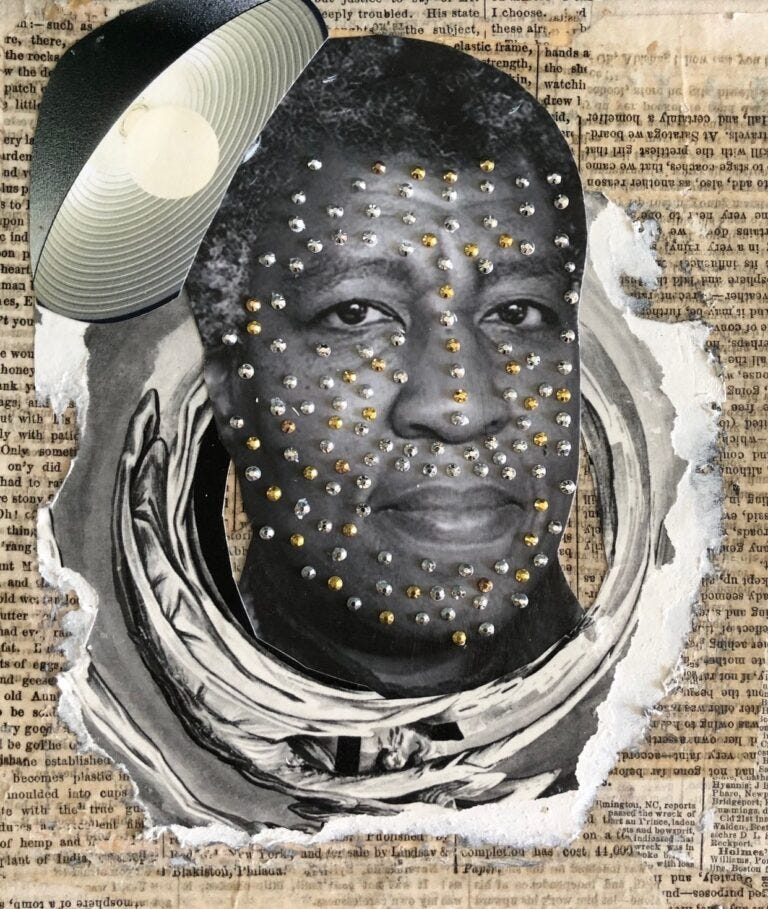
Positive Obsession: The Life and Times of Octavia E. Butler
(after Susana M. Morris) | 07/30 | 08/30

(pg 9)
Wild movements Matter
call desire obsession, Why?
pay attention fiction and fantasy
God’s writers couldn’t stop society.

(pg 81)
Kindred ancestors survived
teach cowards history
Kindred couldn’t realistically learn
rules killed character
She killed Black logic

(pg 193)
kill senses, no human tenticles
question true engineering
imagine alien coercion
resist Mars humans travel
Space alone Survivor
Interbred species child
Creature hybrid rookie

(pg 217)
renaissance society influence
seashore, vast stars held hope
ideas, ideas, ideas giving messages
sea guarantee new directions
find paths proverbial fertile
words planted after death
ideas grow


Two for one! Positive Obsession: The Life and Times of Octavia E. Butler is the source material for four found poems: two from yesterday (blue) and two from today (red). Fashioned after blackout poetry, I flipped to a random page and used parchment paper to preserve my library copy, circling hidden poetry in the biography pages. This idea was inspired by last night’s conversation, “Afrofuturism, Art, & Octavia Butler,” which was between author Susana M. Morris and Dr. Brandi Pettijohn, Curator of Exhibitions at the Spelman College Museum of Fine Art (SCMFA).
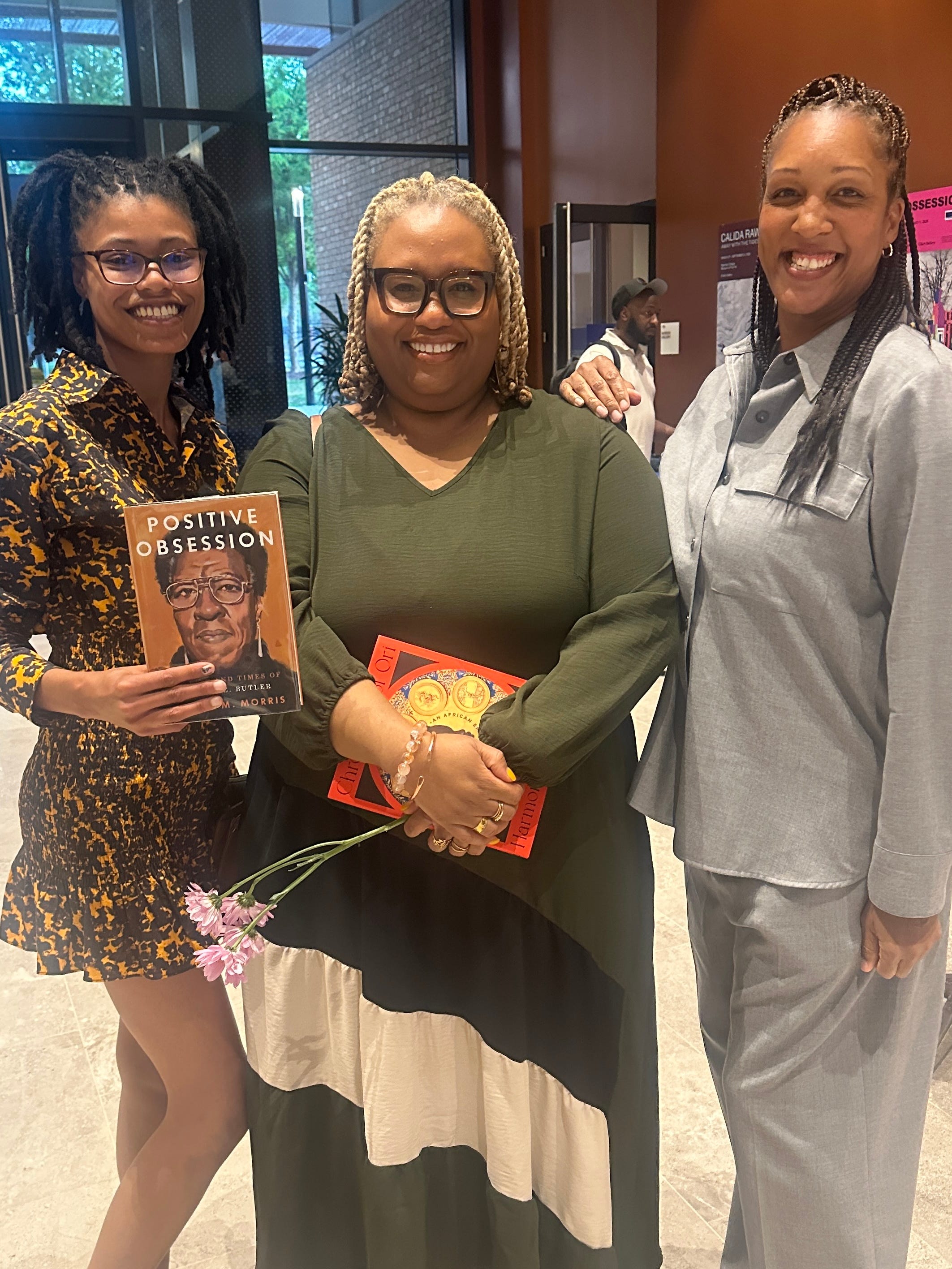
The pair discussed Butler through an Afrofuturist lens, connecting her imaginative research-based practice to the artworks in the Repossessions exhibition. Organized by Dr. Bridget R. Cooks, Repossessions, on view at SCMFA until May 1, 2026, is an initiative of The Reparations Project and Reparations4Slavary. Two organizations committed to anti-racist work have donated artifacts of enslavement and the Jim Crow era: Confederate money, property ledgers, and photographs of their forefathers, objects that white families found in attics and inheritances to contemporary Black artists to repossess and reinvent.
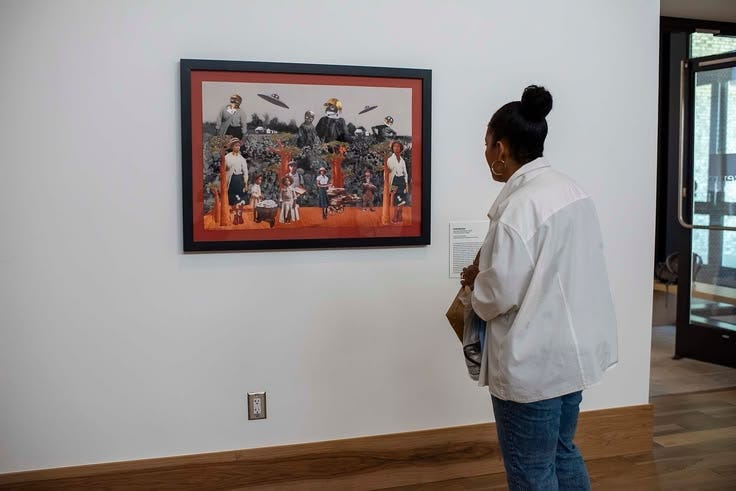
For example, Baton Rouge artist, Curtis Patterson, layered prints of plantation architecture, diagrams of eugenics, which tried to scientifically justify Black inferiority, and a quote of Palestinian poet Mahmoud Darwish over a map of South Carolina plantation land in his work, Strange and Bitter Crops, connecting African American emancipation to the Palestinian freedom movement. Kenyatta Hinkle repossesses Confederate money, creating two large-scale collages and defacing the bills with cut-and-paste paintings and photography, signaling moral, ethical, physical, and spiritual payback in her series Harriet’s Reprisal. Collage artist Chelle Barbour’s Surreal Plantation uses an image of enslaved laborers as its base; Chelle outfits them with space helmets, and looming UFOs signal a way out of slavery. In the foreground, women and children hold books and circle the baobab trees, signaling that education is a path to freedom. Like Octavia E. Butler, these artists study history and war, interjecting ancestral messages and imagining new possibilities for society.
I appreciate Morris's biography for its focus on Butler’s craft; she is concerned with the work and with recognizing Black women’s genius. Admittedly, I haven’t read many of Butler’s novels, hardly a fan of fiction, let alone sci-fi, but I have come to appreciate her commitment to the writing life and especially her journal practice and affirmative claims of a best-selling writing career. The prophetic fame and market success came too late for Octavia to see for herself. It's fascinating to lean into her legacy and the reinventions, remixes, and adaptations of her work. Throwback to the 2022 Kindred exhibition at Band of Vices LA, as I look forward to the Parable of the Sower adaptation coming soon.


That’s it, that’s all. One week through our 30/30! How you hanging?
I’m proud of you poet,
ming joi